•  

South Korea: Fire Breaks Out at Seoul Convention Center, Prompting Evacuation

A fire broke out at the COEX convention center in Gangnam District, southern Seoul on Friday, April 25, prompting an evacuation of the building.

  •  
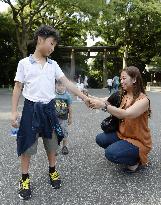
Bug spray at Meiji Jingu shrine

Bug spray at Meiji Jingu shrine

TOKYO, Japan - A woman sprays insect repellant, provided by the Meiji Jingu shrine, on her son at the shrine in Tokyo on Sept. 5, 2014. Yoyogi Park, located nearby, was closed the previous day after being found to be a hotbed of mosquitoes carrying the Dengue virus.

  •  
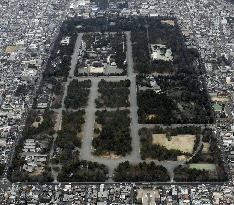
Former imperial residence in Kyoto

Former imperial residence in Kyoto

OSAKA, Japan - File photo taken in January 2013 shows Kyoto Gyoen in the city of Kyoto. Kyoto prefectural government officials said Jan. 29, 2014, that the park will be declared a base for the Self-Defense Forces, police and fire services in the event of natural disasters. The Kyoto Imperial Palace (upper L in the park) and the Kyoto State Guest House (upper R in the park) are exempt from the plan. The palace was the main imperial residence until Emperor Meiji shifted to Tokyo in 1869.

  •  
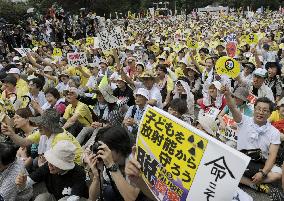
Antinuclear power protest in Tokyo

Antinuclear power protest in Tokyo

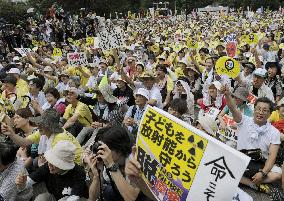
TOKYO, Japan - People attend an antinuclear power protest rally held at Meiji Park in Tokyo on Sept. 19, 2011. The rally was the largest in the country since the nuclear disaster at the Fukushima Daiichi power plant triggered by the March earthquake and tsunami.

  •  
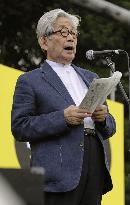
Novelist Oe speaks at antinuclear power event

Novelist Oe speaks at antinuclear power event

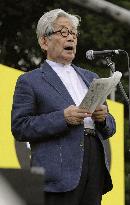
TOKYO, Japan - Nobel Prize-winning writer Kenzaburo Oe delivers a speech at an antinuclear power plant protest gathering at Meiji Park in Tokyo on Sept. 19, 2011.

  •  
Writers, musicians call for farewell to nuclear power

Writers, musicians call for farewell to nuclear power

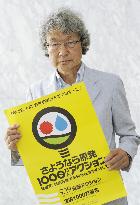
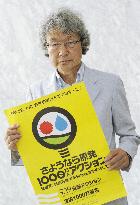
TOKYO, Japan - Freelance journalist Satoshi Kamata holds a poster of an antinuclear rally scheduled at Meiji Park in Tokyo on Sept. 19, aiming to mobilize 50,000 people. Kamata is among writers and musicians who have been promoting the rally as well as collecting 10 million signatures on a petition calling for ending nuclear power in Japan in the wake of the nuclear emergency at the Fukushima Daiichi power plant.

  •  
Writers, musicians call for farewell to nuclear power

Writers, musicians call for farewell to nuclear power

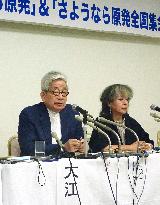
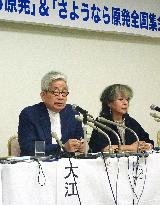
TOKYO, Japan - Nobel Prize-winning novelist Kenzaburo Oe (L) and writer Keiko Ochiai attend a press conference in Tokyo's Chiyoda Ward on Sept. 6, 2011. They released a statement calling on Japan's new government led by Prime Minister Yoshihiko Noda to bid farewell to nuclear power. Writers and musicians, including Oe and Ochiai as well as popular musician Ryuichi Sakamoto, will hold an antinuclear rally at Meiji Park in Tokyo on Sept. 19, aiming to mobilize 50,000 people while collecting 10 million signatures for denuclearization, in the wake of the nuclear emergency at the Fukushima Daiichi power plant.

  •  
Protesters say 'No' to Koizumi's visits to Yasukuni Shrine

Protesters say 'No' to Koizumi's visits to Yasukuni Shrine

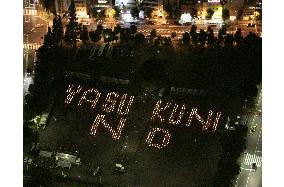
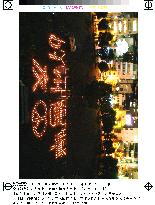
TOKYO, Japan - A group of Japanese, South Korean and Taiwanese people, including bereaved family members of those who died in World War II and lawmakers from Seoul, hold candles to spell out the words ''YASUKUNI NO'' at Meiji Park in Tokyo on Aug. 14 to urge Prime Minister Junichiro Koizumi to refrain from visiting the war-linked Yasukuni Shrine.

  •  
Protesters say 'No' to Koizumi's visits to Yasukuni Shrine

Protesters say 'No' to Koizumi's visits to Yasukuni Shrine

TOKYO, Japan - A group of Japanese, South Korean and Taiwanese people, including bereaved family members of those who died in World War II and lawmakers from Seoul, hold candles to spell out the words ''YASUKUNI NO'' at Meiji Park in Tokyo on Aug. 14 to urge Prime Minister Junichiro Koizumi to refrain from visiting the war-linked Yasukuni Shrine.

  •  
(1)Workers rally in spring labor offensive

(1)Workers rally in spring labor offensive

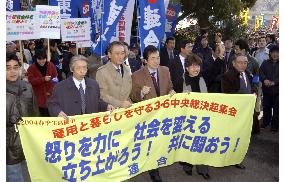
TOKYO, Japan - Japanese Trade Union Confederation (Rengo) leader Kiyoshi Sasamori (3rd from L, front), with Democratic Party of Japan leader Naoto Kan (4th from L, front), takes to the streets after a Rengo-sponsored labor rally at Meiji Park in Tokyo's Shinjuku Ward on March 6. The rally was held ahead of the March 17 announcements on wages by management of major companies.

  •  
(2)Workers rally in spring labor offensive

(2)Workers rally in spring labor offensive

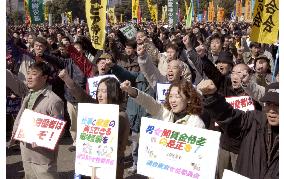
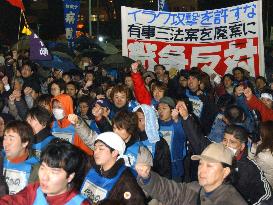
TOKYO, Japan - Workers raise their fists demanding wage increases and better labor conditions at a rally sponsored by the Japanese Trade Union Confederation (Rengo) at Meiji Park in Tokyo's Shinjuku Ward on March 6. They rallied ahead of the March 17 announcements on wages by management of major companies.

  •  
Civic groups wish early normalization of Japan-N. Korea ties

Civic groups wish early normalization of Japan-N. Korea ties

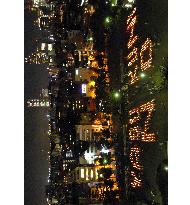
TOKYO, Japan - Members of civic groups form Japanese and Korean characters in candles at Meiji Jingu Park in Tokyo on Sept. 17 to show their wishes for an early restoration of diplomatic relations between Japan and North Korea.

  •  
Rengo trade union holds anti-war campaign

Rengo trade union holds anti-war campaign

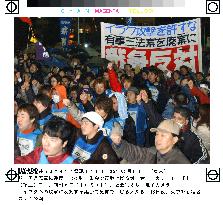
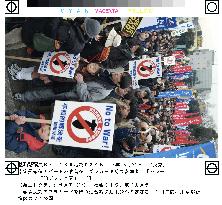
TOKYO, Japan - Members of the Japanese Trade Union Confederation (Rengo) demonstrate in an emergency meeting to oppose a U.S.-led war on Iraq at Meiji Park in Tokyo's Shinjuku Ward on March 18.

  •  
Workers rally for better working conditions

Workers rally for better working conditions

TOKYO, Japan - Workers gather for a labor rally hosted by Japan's largest labor organization Rengo, or the Japanese Trade Union Confederation, at Tokyo's Meiji Park on March 1. They called for better working conditions and protested attacks on Iraq without U.N. resolutions.

  •  
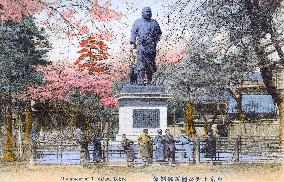
Statue of General Saigo - Ueno Park, Tokyo, Japan

Statue of General Saigo - Ueno Park, Tokyo, Japan

Statue of General Saigo Takamori (Takanaga) (1828-1877). Saigo was one of the most influential samurai in Japanese history, living during the late Edo Period and early Meiji Era. He has been dubbed the 'last true samurai'. The famous bronze statue shown here (of Saigo in hunting attire with his dog) stands in Ueno Park, Tokyo, Japan. Made by Takamura Koun, it was unveiled on 18 December 1898. Date: circa 1910s

  •  
Rengo trade union holds anti-war campaign

Rengo trade union holds anti-war campaign

TOKYO, Japan - Members of the Japanese Trade Union Confederation (Rengo) demonstrate in an emergency meeting to oppose a U.S.-led war on Iraq at Meiji Park in Tokyo's Shinjuku Ward on March 18. (Kyodo)

  •  
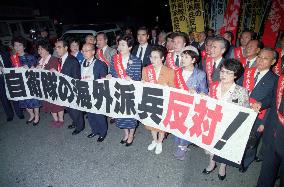
Anti-PKO Demonstration

Anti-PKO Demonstration

Anti-PKO Demonstration - Japanese Socialist Party leader Takako Doi (4th from right, front) leads the demonstration against PKO (Peace Keeping Operation) which allows Japanese Self-Defense Force to operate abroad. (October 26, 1990, Meiji Park, Shinjyuku, Tokyo)

  •  
Event to mark Russell-Einstein Manifesto's 60th anniversary

Event to mark Russell-Einstein Manifesto's 60th anniversary

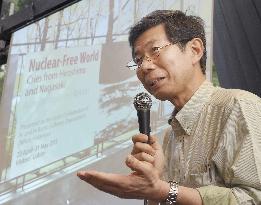
Takao Takahara, a professor at Meiji Gakuin University, speaks during a ceremony at the exhibition hall of Fukuryu Mmaru No.5, a trawler exposed to radioactive fallout from a 1954 U.S. hydrogen bomb test on Bikini Atoll in the Marshall Islands, in Yumenoshima Park in Tokyo on July 5, 2015, to mark the 60th anniversary of the Russell-Einstein Manifesto issued against weapons of mass destruction. (Kyodo) ==Kyodo

  •  
Restored gate at Kanazawa Castle Park unveiled to media

Restored gate at Kanazawa Castle Park unveiled to media

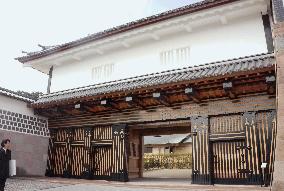
A restored gate at Kanazawa Castle Park in Kanazawa, Ishikawa Prefecture, central Japan, is unveiled to the media on March 6, 2015. The Ishikawa prefectural government restored the gate, which was burnt down during the 1868-1912 Meiji era, with the hope of making it a new attraction ahead of the March 14 opening of the Hokuriku Shinkansen bullet train line linking Tokyo and Kanazawa. (Kyodo) ==Kyodo

  •  
Protesters say 'No' to Koizumi's visits to Yasukuni Shrine

Protesters say 'No' to Koizumi's visits to Yasukuni Shrine

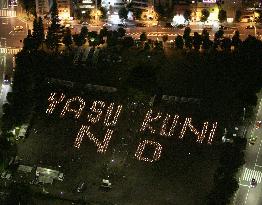
TOKYO, Japan - A group of Japanese, South Korean and Taiwanese people, including bereaved family members of those who died in World War II and lawmakers from Seoul, hold candles to spell out the words ''YASUKUNI NO'' at Meiji Park in Tokyo on Aug. 14 to urge Prime Minister Junichiro Koizumi to refrain from visiting the war-linked Yasukuni Shrine. (Kyodo)

  •  
Protesters say 'No' to Koizumi's visits to Yasukuni Shrine

Protesters say 'No' to Koizumi's visits to Yasukuni Shrine

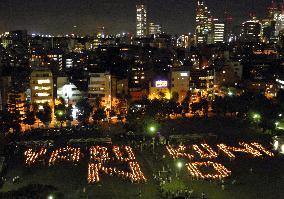
TOKYO, Japan - A group of Japanese, South Korean and Taiwanese people, including bereaved family members of those who died in World War II and lawmakers from Seoul, hold candles to spell out the words ''YASUKUNI NO'' at Meiji Park in Tokyo on Aug. 14 to urge Prime Minister Junichiro Koizumi to refrain from visiting the war-linked Yasukuni Shrine. (Kyodo)

  •  
Lake Ashi

Lake Ashi

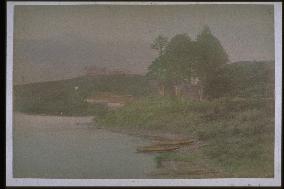
The Hakone Imperial Villa is visible on top of the hill of Dogashima. It was built in 1886 as a villa for Emperor Meiji. This site had been called Dogashima (Dogashima- the island of tower) because there was a tower at the Hakone Gongen Shrine in the ancient times. The imperial villa was built because this is the best location to see the inverted reflection of Fuji on the furface of Lake Ashinoko. Also, this site is close enough to Tokyo to avoid the summer heat. This site is now named Onshi Hakone Park.==Date:unknown, Place:Hakone, Photo:unknown, (Credit:Nagasaki University Library/Kyodo News Images) [Cabinet Number89‐6‐0]

  •  
Maikono-hama coast

Maikono-hama coast

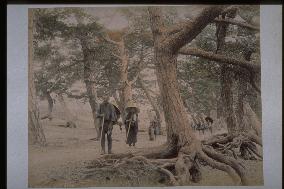
Maikonohama Beach facing inland, taken sometime between the mid- and late-Meiji Period. It is interesting to see the travellers' apparel. There used to be thousands of pine trees here, but today only a fraction remain in Maiko Park. The scenery here changed dramatically in April 198 when the world's largest suspension bridge was built above this site to connect Maiko and Awaji Island.==Date:unknown, Place:Kobe, Photo:unknown, (Credit:Nagasaki University Library/Kyodo News Images) [Cabinet Number85‐29‐0]

  •  
Koraku-en Garden

Koraku-en Garden

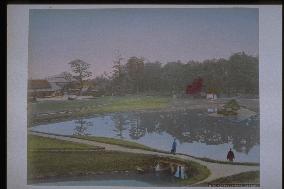
Korakuen Park in present-day Okayama City is a kaiyu style park built by order of Ikeda Tsunamasa, feudal lord of the Okayama Domain, in the late 17th century. Named Korakuen in 1871, it has been designated as the Place of Scenic Beauty by the Japanese government. The photograph B 239 which captures the scenery to the right is assumed to have been taken by Farsari Co. in Yokohama. Therefore, this photograph was probably taken by the same company. Mid to late Meiji Period.==Date:unknown, Place:Okayama, Photo:A. Farsari, (Credit:Nagasaki University Library/Kyodo News Images) [Cabinet Number81‐30‐0]

  •  
Ueno Park

Ueno Park

This is the slope leading from Kuromon Street in Ueno Park to the road next to the approach to Benten-do. The work on the park has not been completed, and it retains a very natural look. The size of the trees can be judged by the two people standing under them. Because the area around the pond has not yet been reclaimed, this photograph must have been taken in the first years of the Meiji Period.==Date:unknown, Place:Tokyo, Photo:R. Stillfried, (Credit:Nagasaki University Library/Kyodo News Images) [Cabinet Number77‐23‐0]

  •  
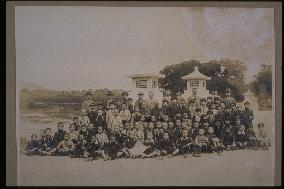
Pupils on a school trip

Pupils on a school trip

A group portrait taken in front of Jingubashi (bridge) during school trip. Harajuku Station was originally built in October 1906, a little closer (north) to Yoyogi than its present location. Meiji Jingu was completed in November, 1919. Jingubashi was built in September 1920 across the Yamanote Line from the Omote Sando (front approach) to the shrine. Kabashima Masayoshi, who founded the first bridge design engineering company in Japan, participated in the construction project. The grove on the far right is part of Meiji Jingu. The left edge of this photograph is now Yoyogi Park. Probably taken between 1921 and 1923.==Date:unknown, Place:Tokyo, Photo:unknown, (Credit:Nagasaki University Library/Kyodo News Images) [Cabinet Number72‐37‐0]

  •  
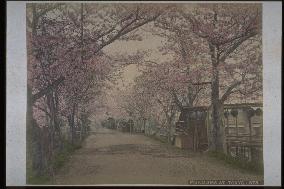
Cherry trees at Mukojima

Cherry trees at Mukojima

Although not visible here, Sumida River is on the left. This is the view from Boku-tei (riverbank) facing upstream. There are many famous historical places at Mukojima such as Ushijima Shinto Shrine (also called Ushi-no-Gozen), Chomeiji Temple which is famous for its sakuramochi (cherry-flavoured rice cakes), Mokuboji Temple, site of Umewaka Mound, Kofukuji Temple with its statue of Hotei, and Mukojima Hyakkaen (Hundred Flower) Park. Yaomatsu Restaurant and the Kototoi Dumpling Shop opened here in the early Meiji Period. Mukojima was a popular among the cultural elite. Same as photograph #2654.==Date:unknown, Place:Tokyo, Photo:unknown, (Credit:Nagasaki University Library/Kyodo News Images) [Cabinet Number59‐4‐2]

  •  
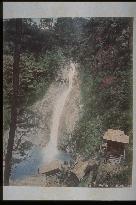
Nunobiki Falls

Nunobiki Falls

Odaki of Nunobiki Falls in the mid-Meiji Period. Because the Odaki and Medaki waterfalls have the appearance of stretched cloth, people started to call them the waterfalls of Nunobiki (pulled cloth). The Nunobiki Amusement Park was built by a private company in 1872, and the area was subsequently developed for entertainment purposes. This was taken around the same time as photograph #2816 (Stone Stairs of Mt. Maya).==Date:unknown, Place:Kobe, Photo:unknown, (Credit:Nagasaki University Library/Kyodo News Images) [Cabinet Number56‐10‐0]

  •  
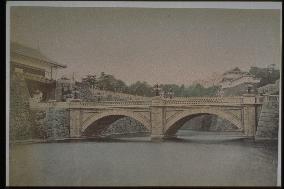
Niju-bashi Bridge,the Imperial Palace

Niju-bashi Bridge,the Imperial Palace

Ote Bridge of Nishinomaru (foreground) was replaced with an arched stone bridge in 1887. Although it is hidden behind the stone bridge, Nishinomaru Shimojo-bashi was replaced with an iron bridge in October 1888 at the time of the construction of new palace buildings. Ornamental lamps were installed for the first time here. (One of these is preserved at the Meiji Village theme park). The present-day Nishinomaru Shimojo-bashi Bridge was rebuilt in a similar design in 1964. The watchtower on the right was transferred from Fushimi Castle in Kyoto and re-named Fushimi Yagura. Mid-Meiji Period.==Date:unknown, Place:Tokyo, Photo:unknown, (Credit:Nagasaki University Library/Kyodo News Images) [Cabinet Number53‐41‐0]

  •  
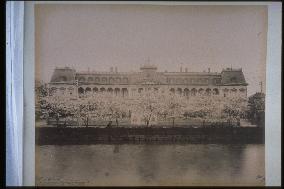
First Imperial Hotel

First Imperial Hotel

The hotel is still at this location, but the entrance faces west onto Hibiya Dori rather than north as in this photograph. A moat connected Hibiya Mitsuke and Yamashita Mitsuke. The moat was filled in at the time of the opening of Hibiya Park in 1903. Takarazuka Theatre and Sukaraza Theatre are now standing on the former moat. The building in this photograph burnt down on April 16, 1922. Mid-Meiji Period.==Date:unknown, Place:Tokyo, Photo:unknown, (Credit:Nagasaki University Library/Kyodo News Images) [Cabinet Number53‐45‐0]

  •  
Autumn tints of Takinogawa, Oji

Autumn tints of Takinogawa, Oji

The photographs of Takinogawa taken during the Meiji Period capture the beauty of the autumn colours. However, after World War II, the development of the residential areas changed the area upstream. The river banks were covered with concrete and the river started to smell due to waste water from houses. The local people launched a movement to protect the river, and finally the government built the Otonashi River Shinsui (Water Friendly) Park in 1985. Spring water is mixed with the natural flow and filtered. Thus, clean water is circulated in certain areas. Depicting the area under present-day Otonashi Bridge, this photograph was taken by Kusakabe Kinbei between 1877 and 1887 (second decade of the Meiji Period).==Date:unknown, Place:Tokyo, Photo:Kusakabe Kinbei, (Credit:Nagasaki University Library/Kyodo News Images) [Cabinet Number53‐32‐0]

  •  
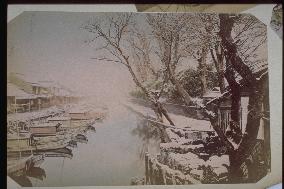
Winter scenery at Sanyabori

Winter scenery at Sanyabori

Sanya Moat looking upstream from Imadobashi, the bridge furthermost downstream on the moat. Until the mid-Meiji Period, this area was a pleasure quarter with restaurants and geisha houses. The Choki-bune (boats) that ferried customers to the Yoshiwara pleasure quarter used to pass here, and thus going to Sanya became a synonym for going to Yoshiwara. Nine bridges spanned Sanya Moat, but they were all later removed as part of land reclamation projects. The site is now Sanyabori Park. This photograph was taken in 1868 by Uchida Kuichi.==Date:unknown, Place:Tokyo, Photo:unknown, (Credit:Nagasaki University Library/Kyodo News Images) [Cabinet Number51‐34‐0]

  •  
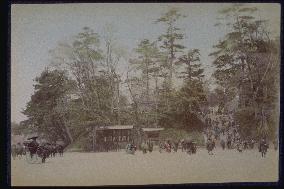
The entrance to Ueno Park

The entrance to Ueno Park

The stairs on the right lead to Ueno Park from Ueno Square. The hill above the stairs was called Sakuragaoka. A Confucian Shrine (later moved to Yushima) was built there in 1630 by Hayashi Razan. The famous statue of Saigo Takamori by Takamura Koun was erected here in 1897. The roof to the left of the stairs is Ueno Kiyomizu-do, built by the priest Tenkai. The Kuromon (Black Gate) was stood formerly on the site at the left edge of the photograph. Mid-Meiji Period.==Date:unknown, Place:Tokyo, Photo:Tamamura Kozaburo, (Credit:Nagasaki University Library/Kyodo News Images) [Cabinet Number48‐68‐0]

  •  
Fountain at Suwa Park

Fountain at Suwa Park

Fountain at Suwa Park==Date:Middle Meiji (1883-1897), Place:Nagasaki, Photo:unknown, (Credit:Nagasaki University Library/Kyodo News Images)

  •  
Ueno Park

Ueno Park

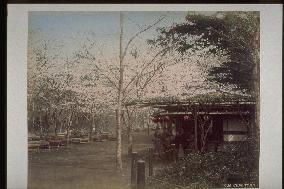
Ueno Park has been a popular spot to enjoy cherry blossoms since the Meiji Period. The Buddhist priest Tenkai planted wild cherry trees here, and from the Meiji Period someiyoshino cherry trees were planted. Women and children are visible at the teahouse, and the men appear to be enjoying the blossoms on the bench under the cherry trees.==Date:unknown, Place:Tokyo, Photo:unknown, (Credit:Nagasaki University Library/Kyodo News Images) [Cabinet Number47‐4‐0]

  •  
Cherry trees at Ueno Park

Cherry trees at Ueno Park

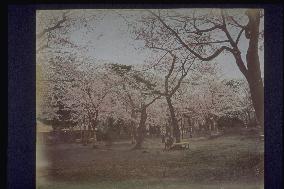
Ueno park is one of the parks built by the Meiji government. Shiba Park is also one of them, and both have a similar characteristic that the tomb place of the Shogun were opened to the public. The Azumaya can be seen to the left rear, and a craftsman-like man stands on the bench built by the trunk of the cherry tree in the center.==Date:unknown, Place:Tokyo, Photo:unknown, (Credit:Nagasaki University Library/Kyodo News Images) [Cabinet Number37‐64‐0]

  •  
Ueno Park

Ueno Park

Ueno Park was located within the compounds of Toeizan Kaneiji Temple during the Edo Era, and many buildings and pagodas stood there. Most of them were destroyed when the Shogitai and government army fought at the time of the Meiji Restoration.==Date:unknown, Place:Tokyo, Photo:unknown, (Credit:Nagasaki University Library/Kyodo News Images) [Cabinet Number37‐1‐0]

  •  
Kazagashira mountain

Kazagashira mountain

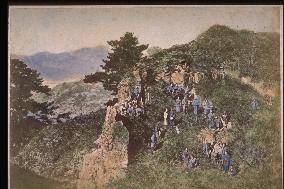
Mt. Kazagashira is located in the eastern part of Nagasaki City, and at the foot stand many famous temples of Nagasaki. The cemeteries of each temple climb the mountain to the peak. Before the Meiji era, some people picniced for a whole day on this hillside. At present it is the Kazagashira Park. This is almost the same as the photo numbered 14-47.==Date:unknown, Place:Nagasaki, Photo:unknown, (Credit:Nagasaki University Library/Kyodo News Images) [Cabinet Number26‐14‐0]

  •  
Maruyama park

Maruyama park

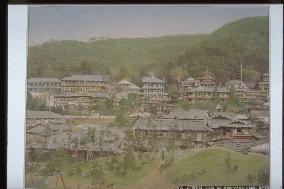
The foot of Mt. Higashiyama in the western part of the Higashiyama district of Kyoto city. This was formerly a temple and shrine territory of the Gion Kanjin etc., but it was bought by the government during the Meiji Restoration, converted to a park in 1886 and called Maruyama Park from the former Maruyama Anyoji Temple. In the Meiji era, it was a pleasure spot with artificial spas, rental seats, and hotels. Hotels can be seen on the hillside amid trees.==Date:unknown, Place:Kyoto, Photo:unknown, (Credit:Nagasaki University Library/Kyodo News Images) [Cabinet Number19‐5‐0]

  •  
Kazagashira mountain

Kazagashira mountain

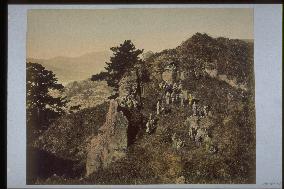
Mt.Kazagashira is located to the east of Nagasaki city, and famous temples line up along its foot. The graveyards behind these temples stretch up to the peak of the mountain. Before the Meiji era, many people came to enjoy the day on this hillside. There are many old photos of the view of Nagasaki harbour from the top of the mountain. At present, it is the Kazagashira Park.==Date:unknown, Place:Nagasaki, Photo:unknown, (Credit:Nagasaki University Library/Kyodo News Images) [Cabinet Number14‐47‐0]

  •  
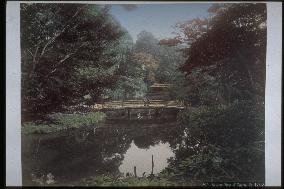
Miyajima Island,Aki

Miyajima Island,Aki

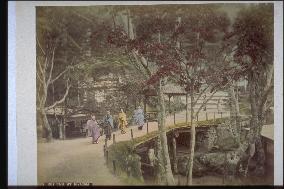
Momijidani Park is located at the foot of the Misen Virgin Forest, a natural monument. This beautiful park can be enjoyed throughout the year, with fresh greenery in spring, trees aflame with red and yellow colours in autumn. The earthen bridge at the entrance to the park called Momijibashi is representative of Meiji Period bridges.==Date:unknown, Place:Miyajima, Photo:Ogawa Kazumasa, (Credit:Nagasaki University Library/Kyodo News Images) [Cabinet Number7‐37‐0]

  •  
Writers, musicians call for farewell to nuclear power

Writers, musicians call for farewell to nuclear power

TOKYO, Japan - Nobel Prize-winning novelist Kenzaburo Oe (L) and writer Keiko Ochiai attend a press conference in Tokyo's Chiyoda Ward on Sept. 6, 2011. They released a statement calling on Japan's new government led by Prime Minister Yoshihiko Noda to bid farewell to nuclear power. Writers and musicians, including Oe and Ochiai as well as popular musician Ryuichi Sakamoto, will hold an antinuclear rally at Meiji Park in Tokyo on Sept. 19, aiming to mobilize 50,000 people while collecting 10 million signatures for denuclearization, in the wake of the nuclear emergency at the Fukushima Daiichi power plant. (Kyodo)

  •  
Writers, musicians call for farewell to nuclear power

Writers, musicians call for farewell to nuclear power

TOKYO, Japan - Freelance journalist Satoshi Kamata holds a poster of an antinuclear rally scheduled at Meiji Park in Tokyo on Sept. 19, aiming to mobilize 50,000 people. Kamata is among writers and musicians who have been promoting the rally as well as collecting 10 million signatures on a petition calling for ending nuclear power in Japan in the wake of the nuclear emergency at the Fukushima Daiichi power plant. (Kyodo)

  •  
Antinuclear power protest in Tokyo

Antinuclear power protest in Tokyo

TOKYO, Japan - People attend an antinuclear power protest rally held at Meiji Park in Tokyo on Sept. 19, 2011. The rally was the largest in the country since the nuclear disaster at the Fukushima Daiichi power plant triggered by the March earthquake and tsunami. (Kyodo)

  •  
Novelist Oe speaks at antinuclear power event

Novelist Oe speaks at antinuclear power event

TOKYO, Japan - Nobel Prize-winning writer Kenzaburo Oe delivers a speech at an antinuclear power plant protest gathering at Meiji Park in Tokyo on Sept. 19, 2011. (Kyodo)

  •  
Antinuclear power gathering in Tokyo

Antinuclear power gathering in Tokyo

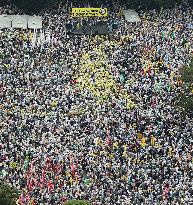
TOKYO, Japan - Photo taken from a Kyodo News helicopter shows people attending an antinuclear power protest rally at Meiji Park in Tokyo on Sept. 19, 2011. Notable speakers at the event included Nobel Prize winning writer Kenzaburo Oe. (Kyodo)

  •  
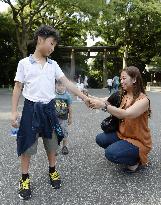
Bug spray at Meiji Jingu shrine

Bug spray at Meiji Jingu shrine

TOKYO, Japan - A woman sprays insect repellant, provided by the Meiji Jingu shrine, on her son at the shrine in Tokyo on Sept. 5, 2014. Yoyogi Park, located nearby, was closed the previous day after being found to be a hotbed of mosquitoes carrying the Dengue virus. (Kyodo)

  •  
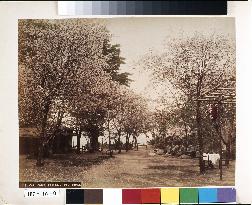
Cherry trees at Suwa Park

Cherry trees at Suwa Park

The west side of Suwa Park is viewed from near the fountain around 1895. The cherry blossoms in full bloom are depicted with bright tinting. This is said to be the first Western-style fountain built in Japan. The cherry trees inside the fence seems to be the ganjitsu-sakura species. This is a soothing scene of Suwa Park in the mid-Meiji Period.==Date:unknown, Place:Nagasaki, Photo:unknown, (Credit:Nagasaki University Library/Kyodo News Images) [Cabinet Number107‐10‐0]

  •  
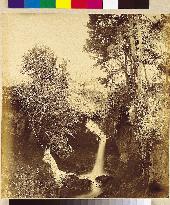
The Juniso Falls

The Juniso Falls

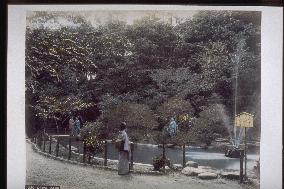
Kumano Falls and Juniso Pond, located near Kumano Shinto Shrine (present day Chuo Park, Shinjuku Ward), were sightseeing spots since the Edo Period. The deity of Kumano Shinto Shrine had been transferred to the shrine from Kishu (present-day Wakayama Prefecture). Even during the Meiji Period these places were popular because they made an easy day trip from the city. It is said that many people used to bathe here in summer. The waterfall disappeared due to the construction of a water filtration plant in 1893, and the pond was eventually filled in. At present, people enjoy the hot springs in concrete buildings. Taken by Felix Beato in the beginning of the Meiji Period.==Date:unknown, Place:Tokyo, Photo:F. Beato, (Credit:Nagasaki University Library/Kyodo News Images) [Cabinet Number104‐10‐0]

  •  
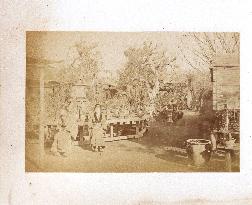
Asakusa Park

Asakusa Park

Asakusa Park==Date:Early Meiji, Place:Tokyo, Photo:unknown, (Credit:Nagasaki University Library/Kyodo News Images)

  • Main
  • Top
  • Editorial
  • Creative
  • About Us
  • About ILG
  • Terms of use
  • Company
  • BEHIND
  • Price List
  • Single Plan
  • Monthly Plan
  • Services
  • Shooting
  • Rights Clearance
  • Support
  • FAQ
  • How To Buy
  • Contact Us
  • Become a Partner

© KYODO NEWS IMAGES INC

All Rights Reserved.

  • Editorial
  • Olympics
  • News
  • Sports
  • Japan
  • Tech
  • Royal
  • Disaster
  • NorthKorea
  • Old Japan
  • SNS
  • Creative
  • Food
  • Japan
  • Landscape
  • Animal
  • Popular
  • #Ukraine
  • #China
  • #coronavirus
  • #N. Korea
  • #Thailand
  • #Russia
  • #Ukraine
  • #China
  • #coronavirus
  • #N. Korea
  • #Thailand
  • #Russia
  • Food
  • Japan
  • Landscape
  • Animal
  • Olympics
  • News
  • Sports
  • Japan
  • Tech
  • Royal
  • Disaster
  • NorthKorea
  • Old Japan
  • SNS